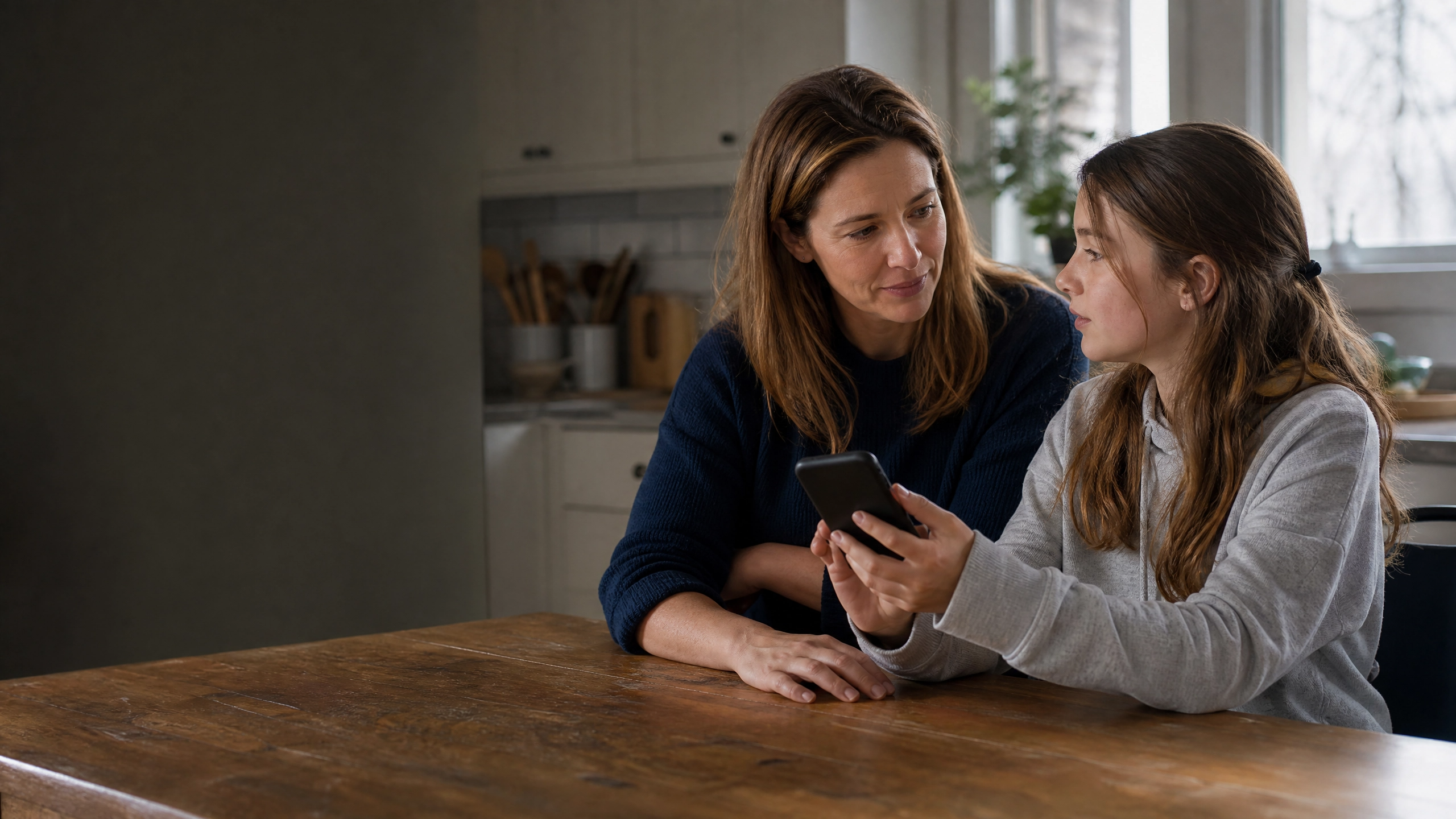
“Less screen time” sounds simple until a child’s device is also where they do homework, talk with grandparents, watch a tutorial, play with friends, and relax. Healthy screen-time habits are not only about counting minutes. They are about whether technology is supporting a family’s priorities or crowding out sleep, movement, school, relationships, and offline interests.
A useful plan should be specific enough to guide a busy day and flexible enough to change when the child grows or the family’s schedule shifts. Instead of treating every screen as identical, families can ask what is happening on the screen, how it feels afterward, and what else has room in the day.
A video call with a grandparent, a school assignment, a creative project, and an endless autoplay feed are all screen use, but they serve different purposes. The American Academy of Pediatrics (AAP) says its guidance does not set one screen-time limit that applies to every child and teen. It recommends considering the quality and context of media use, not just the total amount.[1]
That does not mean time is irrelevant. Time matters when it displaces sleep, physical activity, face-to-face connection, or responsibilities. It also matters when a child is having trouble stopping, feels worse after a particular activity, or is regularly exposed to content that is not right for their age. The AAP notes that the relationship between screen use and wellbeing is complex and can vary with developmental stage, the kind of device or activity, and a young person’s circumstances.[1]
For very young children, age-specific recommendations from pediatric and public-health organizations may be relevant. Ask a pediatrician about guidance for your child’s age, development, and needs rather than applying one family’s rule to every household.
Before setting limits, name the parts of family life you want to protect. For many households, those include enough sleep, regular movement, school or work responsibilities, meals together, unhurried play, and time with friends. Ask each child which digital activities matter to them and which ones leave them energized, bored, or upset.
This conversation changes the question from “How do we take the phone away?” to “How do we make sure the important things still happen?” The AAP recommends looking at whether media use is crowding out healthy behaviors and suggests creating screen-free times and places, such as family meals.[1] That approach is easier to explain and sustain than an arbitrary rule with no connection to daily life.
A family media plan can be a few shared agreements, not a complicated contract. The AAP’s Family Media Plan is designed to be customized to a household’s priorities and routines, with practical tips and the option to revisit the plan as needs change.[2]
Choose two or three starting rules. You might keep devices away during meals, charge phones outside bedrooms overnight, or pause entertainment screens during homework that needs focus. Decide how schoolwork, accessibility tools, calls with relatives, and creative projects fit into the rule. A plan that recognizes legitimate uses is more credible to children than one that assumes every screen activity is a distraction.
Make the agreement mutual. If adults want children to put phones away at dinner, adults should do the same. If a parent needs to stay reachable for work, explain the exception and model how to return attention to the conversation. Rules feel fairer when children see the people who set them following the same values.
Small changes to the environment can make a plan more realistic. Turn off nonessential notifications during homework or family time. Disable autoplay where possible. Put chargers in a shared spot rather than beside the bed. Keep a basket or shelf near the dining area for devices during meals. These changes lower the number of decisions everyone has to make in the moment.
Build a bedtime routine that does not depend on willpower alone. Agree on a device parking time, then choose a replacement activity such as reading, music, drawing, stretching, or a quiet conversation. If a child uses a device for an alarm or accessibility need, find a practical alternative rather than treating it as defiance.
Offer inviting offline options without turning them into a punishment. A walk, a game, a craft, helping prepare food, or meeting a friend can make balance feel like adding good experiences rather than removing a favorite one. Children are more likely to cooperate when they help choose the alternatives.
A weekly check-in can reveal whether a screen-time rule is working. Ask: Is bedtime going smoothly? Is the child getting the movement and connection they need? Which apps or activities feel enjoyable? What is difficult to stop? Does a particular feed leave them anxious or comparing themselves with others?
If the family’s tracking tool produces only arguments, stop treating the number as the score. Use it as one clue, alongside sleep, mood, school focus, physical activity, and family relationships. The AAP notes that rules centered on balance, content, co-viewing, and communication are associated with better wellbeing outcomes than rules focused only on time.[1]
Change one thing at a time. If late-night scrolling is the problem, focus on charging devices outside bedrooms before attempting to redesign the whole week. If a game is interrupting homework, agree on a clear play window after the assignment rather than banning all games. A narrow rule makes it easier to tell whether the change helped.
Pushback does not automatically mean a family rule is wrong. It may mean a child is worried about missing a group conversation, losing social connection, or being treated differently from friends. Listen for the underlying concern. Where possible, offer a choice about timing or a gradual transition while keeping the important boundary intact.
If a child repeatedly cannot disengage, becomes very distressed when access ends, or has sleep, mood, school, or relationship problems that persist, talk with a pediatrician or qualified mental-health professional. This is not a reason to label the child. It is a way to understand whether something else is going on and to make a plan suited to them.
Healthy screen-time habits come from clear priorities, predictable routines, and respectful conversation. Protect sleep and shared family moments, make space for offline activities, and pay attention to what a child does online as well as how long they do it. Start with a few workable agreements, model them as adults, and review them as children and circumstances change.